Bridging the Education-Employability Chasm: Azim Premji University Report Exposes Crisis Facing India’s Educated Youth
'Degrees Without Destiny: How Quality Gaps, Skill Mismatches, and Inequality Threaten India’s Demographic Dividend'
India is widely celebrated as one of the world's youngest nations, boasting a vast working-age population positioned as the bedrock of its future economic growth. However, when this educated demographic struggles to secure meaningful employment, the promise of a "demographic dividend" transforms into a critical policy challenge.
The recently released 'State of Working India 2026' report by Azim Premji University provides a rigorous, data-driven analysis of this complex reality. The report documents a poignant crisis: while higher education access has expanded significantly, the economy has failed to generate a proportionate volume of stable, high-quality jobs.
The Higher Education Paradox: Surging Enrollment, Shrinking Male Numbers
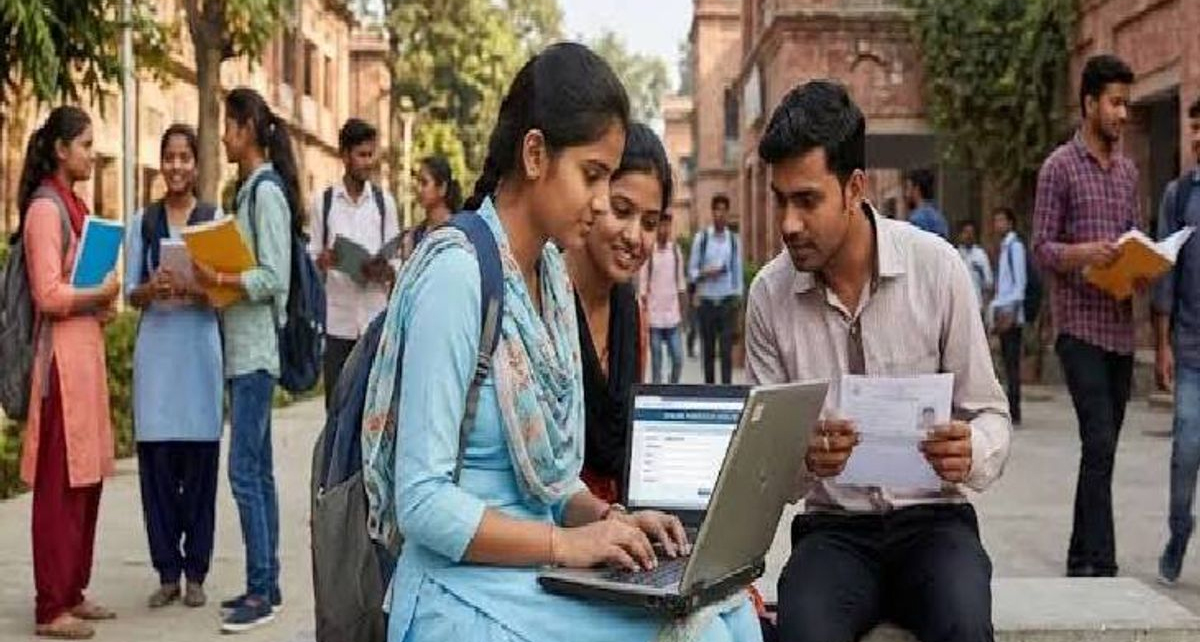
Over the last four decades, India’s higher education infrastructure has expanded rapidly across universities, colleges, and technical institutes.
Gross Enrollment Rate (GER): Reached 28%, driven heavily by increased participation among women.
Female Participation: Marked gains in non-traditional sectors such as Information Technology (IT), automotive, and business services.
Male Enrollment Decline: Dropped from 38% in 2017 to 34% by late 2024, primarily due to young adult males entering the informal labor force early to support family livelihoods.
Institutional Expansion: Between 2010 and 2021, the density of colleges rose from 29 to 45 per 100,000 youth, alongside a ~300% growth in Industrial Training Institutes (ITIs).
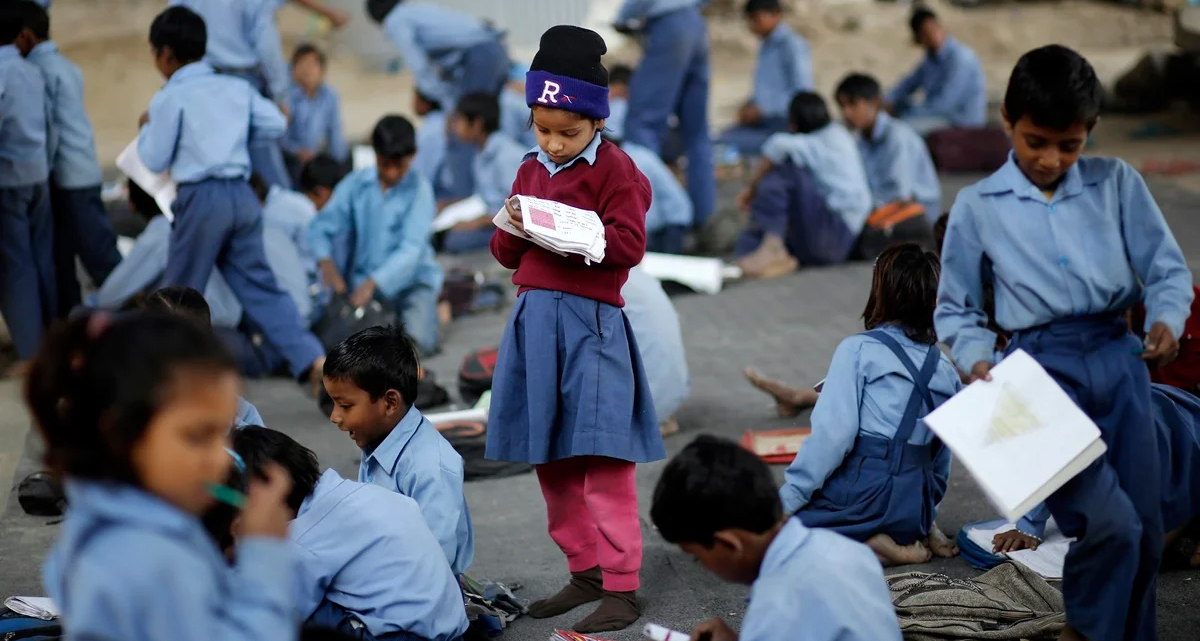
Despite this physical expansion, severe faculty shortages and high student-teacher ratios in both public and private institutions continue to compromise the quality of instruction.
Unemployment and Underemployment: The Reality for Graduates
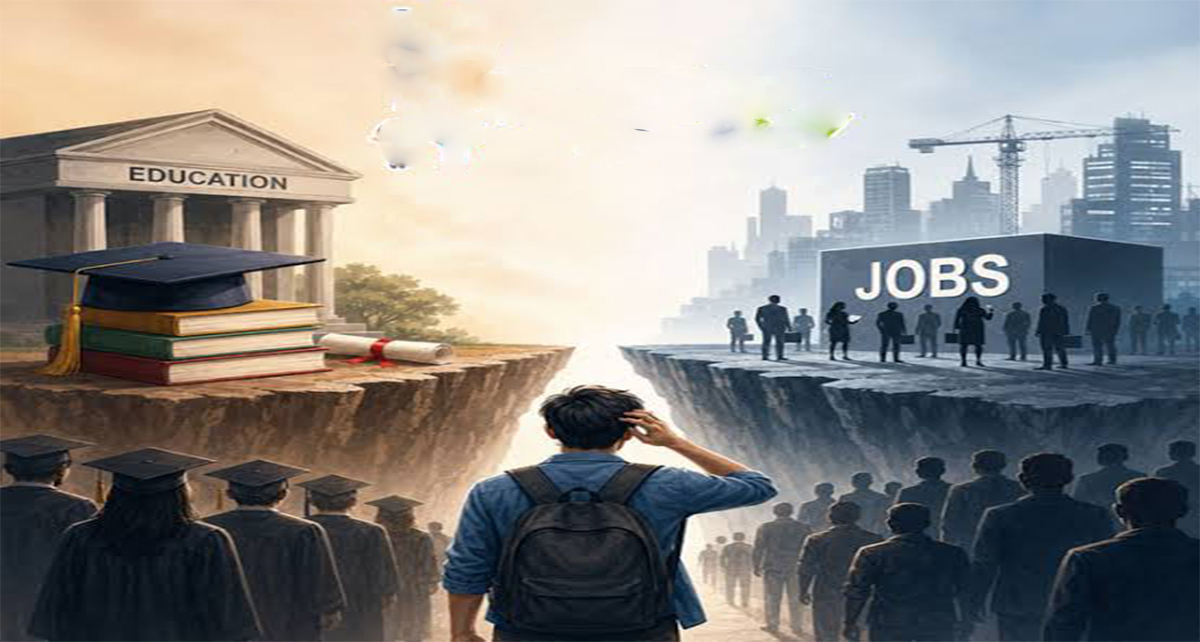
The long-held narrative that a higher education degree automatically guarantees stable employment is increasingly decoupled from labor market dynamics.
| Youth Demographic / Metric | Key Data Point & Reality |
|---|---|
| Graduate Workforce (Ages 20–29) | Out of 63 million graduates, approximately 11 million remain unemployed. |
| Unemployment Rate (Ages 15–25) | Stands at an alarming ~40% for graduates, dropping to ~20% for those aged 25–29. |
| First-Year Job Stability | Only 7% of graduates secure a permanent, salaried job within one year of graduation. |
| Underemployment Crisis | Widespread skill degradation, with qualified engineers and graduates taking gig-economy delivery or temporary data-entry roles. |
Inequity in Outcomes and Economic Shifting
While enrollment among low-income households rose from 8% in 2007 to 15% in 2017, structural inequities persist. Expensive professional degrees remain concentrated among affluent socio-economic classes, securing them premium positions in the formal sector. Consequently, while access to education has democratized, income and employment inequality remain entrenched.
Simultaneously, the workforce is transitioning away from agriculture toward manufacturing and services. While discrimination based on caste and gender in professional domains shows signs of decline, total job creation in high-skill sectors remains insufficient to absorb the annual influx of graduates.
Closing the Window: The Demography Deadline
India faces a narrow timeframe to capitalize on its favorable demographics before the proportion of its working-age population begins to decline after 2030. Unlocking this potential requires immediate systemic reform:
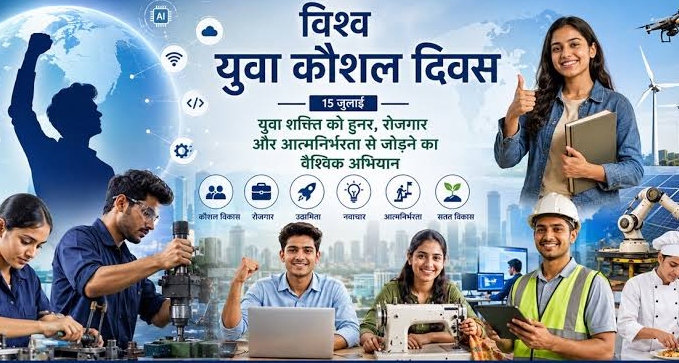
Curriculum & Industry Alignment: Overhauling degree structures to transition from theoretical credentialism to industry-aligned skill acquisition.
Quality-Driven Skill Development: Upgrading ITI and vocational frameworks to meet modern technological demands.
Employment-Centric Economic Policy: Prioritizing job-creating growth models over capital-intensive growth alone.
Fostering Entrepreneurship: Supporting young innovators to transition from job seekers into job creators.
Targeted Equity Policies: Ensuring marginalized groups receive high-quality professional training and post-education placement support.
Addressing the education-employability mismatch is no longer merely an economic objective; it is a vital social requirement. Without urgent, targeted policy intervention, India risks turning its greatest strategic asset into its most formidable socioeconomic hurdle.