Reimagining Urban Housing: Turning India’s Shelter Deficit into a Trillion-Dollar Macroeconomic Engine
To sustain its rapid urbanization and unlock massive multiplier effects across employment and GDP, India must transition from treating low-cost housing as social welfare to positioning it as fundamental economic infrastructure.
India’s rapid urbanization presents one of the most dynamic economic transformations in modern history. As engines of productivity, higher wages, and rapid expansion, Indian cities are attempting to absorb rural-to-urban migration at an unprecedented scale. However, urban policy has consistently stumbled in one crucial area: housing policy.
For decades, low-cost urban housing has been misclassified as social welfare, redistribution, or pure philanthropy. This perspective misses a fundamental macroeconomic reality—much like power grids, highways, and logistics corridors, housing is essential economic infrastructure.
Without a well-housed workforce, urban productivity stalls. Addressing India's severe housing deficit is not merely a social obligation; it is an unexploited macroeconomic lever capable of driving sustained industrial growth, formalizing labor markets, and generating systemic economic momentum.
The Scale of the Deficit
According to NITI Aayog committee estimates from December 2025 utilizing the UN Household Deficit Framework, India faces a shortfall of 50 to 70 million housing units across metropolitan, urban, and semi-urban centers. Conservative estimates by industry bodies such as CII and Knight Frank project a shortfall of at least 31.2 million urban houses by 2030.
While the Government of India’s Housing for All initiative aims to add 10 million urban homes by 2029—supported by a 36% budget increase to ₹30,171 crore for the Pradhan Mantri Awas Yojana-Urban (PMAY-U) in FY25—this addresses only a fraction of the demand. Resolving the broader shortage requires deep structural reform.
The Macroeconomic Multiplier Effect
In any economy, housing is among the most deeply networked sectors, directly stimulating industries like cement, steel, logistics, paints, fixtures, and financial services.
1. International Evidence
An extensive International Labour Organization (ILO) study spanning 45 countries (1995–2009) revealed that the economic output multiplier for the construction sector consistently exceeds the economy-wide average, regardless of a nation's income group.
In middle-income nations, every $1 million invested in construction generates approximately $3.6 million in total economic output.
2. Domestic Growth Dynamics
According to the Ministry of Statistics and Programme Implementation (MOSPI), India's construction sector recorded an 8.6% real Gross Value Added (GVA) growth rate in FY 2024-25, outperforming most primary economic sectors. The fundamental question for policymakers is not if construction drives growth, but whether India is directing capital to where the economic multiplier is highest.
Labor Formalization: Unlocking Induced Consumption
The construction sector is highly sensitive to employment generation and capital infusion, currently employing over 50 million workers.
However, systemic informalities cap its true economic impact:
Suppressed Wages: As of 2022, nearly 70% of unskilled construction workers did not receive the prescribed minimum daily wage.
Muted Induced Multiplier: Low wages and informal working conditions restrict disposable income, preventing workers from engaging in broader consumer spending and dampening the overall induced multiplier effect.
If construction labor is formalized and wages are normalized, the economic multiplier of housing investment will expand dramatically across retail, healthcare, and consumer goods sectors.
Structural Bottlenecks of Existing Frameworks
While PMAY-U represents one of the world's most ambitious public housing interventions, its underlying design heavily favors homeownership—a model that unintentionally excludes the most vulnerable urban populations.
Land Ownership Requirement: The beneficiary-led construction component primarily assists those who already own land.
Formal Credit Reliance: Credit-linked subsidies cater to families with verifiable, formal incomes.
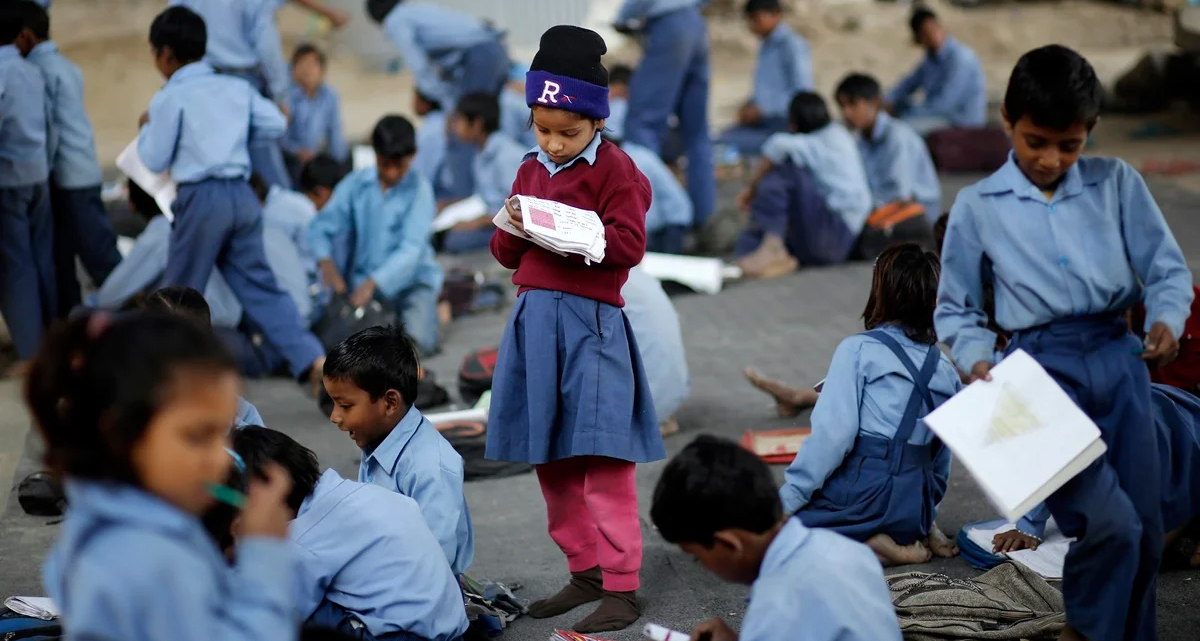
Consequently, landless migrant workers, informal laborers, and daily-wage earners remaining on city footpaths are left outside the reach of ownership-focused schemes. For families earning under ₹15,000 per month in primary hubs like Mumbai, Delhi, or Bengaluru, individual home purchase is mathematically unviable due to soaring land costs, interest rates, and loan terms.
The Path Forward: Public Rental Ecosystems
To bridge this structural gap, India's urban policy must pivot toward large-scale public rental housing infrastructure.
Key Strategic Framework:
Public-Private Partnerships: Build rental housing on public land via private developers through 50-to-60-year long-term leases.
Controlled Rents & Financial Security: Implement controlled tariff structures backed by stable, long-term rental income yields to secure institutional debt.
Targeted Inclusivity: Direct affordable rental supply specifically at landless migrant workers, gig workers, and informal urban labor.
The Demographics of Urgency: Global Precedents
NITI Aayog projects that India’s urban population will surge from 500 million in 2021 to 850 million by 2050. This influx of 350 million new urban dwellers—roughly equivalent to the entire population of the United States—will require viable living spaces over the coming decades.
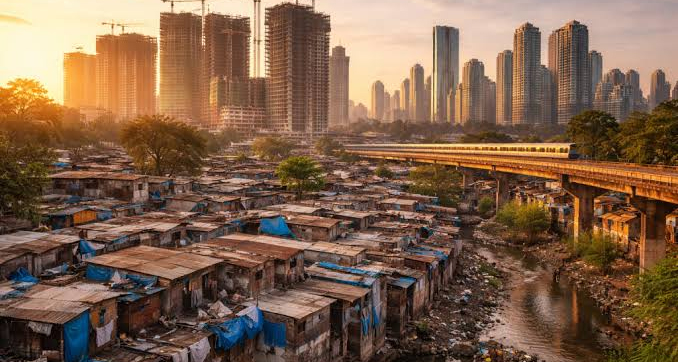
Without structural rental options, this rapid influx risks expanding informal settlements and placing immense strain on urban infrastructure. China successfully navigated a similar transition during its peak growth era by executing comprehensive land reforms, fostering state-backed developer markets, and systematically expanding real estate credit.
India possesses all the vital components to write a compelling growth story: rapid urbanization, high economic returns from construction, and a housing deficit concentrated precisely within its productive working-age population.
Conclusion
Institutional alignment is gradually taking shape as land reforms and rental housing frameworks gain traction among planners. The ultimate task for policymakers is to shift the overarching question:
Old Paradigm: "How much public money can we afford to spend on housing the poor?"
New Paradigm: "How much GDP growth are we losing every year by failing to invest in urban housing infrastructure?"
Reframing housing as a high-yield economic catalyst rather than a welfare expense opens a clear pathway toward sustained, inclusive macroeconomic growth.