Concrete Dreams and Welfare Realities: Navigating Uttar Pradesh’s ₹9.12 Lakh Crore Budget Balancing Act
As high-speed corridors meet direct benefit transfers, India’s most populous state balances capital-led growth against the fiscal demands of social sustainability.
When Finance Minister Suresh Khanna presented Uttar Pradesh’s historic ₹9.12 lakh crore budget for FY 2026–27 in the State Assembly, it painted two distinct economic narratives. On one hand stood grand infrastructure projects like the Gorakhpur-Saharanpur High-Speed Corridor and Jewar International Airport; on the other lay direct financial transfers powering pensions and welfare schemes for millions of women, elderly citizens, and students. While the administration credits these interventions with lifting over 60 million people out of poverty, fiscal analysts raise a critical question: Can this welfare-heavy economy remain sustainable without doubling the state's own tax revenues?
1. Budgetary Blueprint: Capital Expenditure vs. Revenue Commitments
The budget for FY 2026–27 totals ₹9,12,696 crore, representing a major expansion in state expenditure that balances infrastructure creation with social safety nets.
Revenue Expenditure: Allocated at ₹6,64,471 crore, catering to administrative costs, welfare schemes, and committed liabilities.
Capital Expenditure: Set at ₹2,48,226 crore, dedicated to long-term asset creation and infrastructure projects.
New Schemes: Contains provision for new initiatives worth ₹43,565 crore.
Fiscal Health: The state estimates a revenue surplus of ₹64,458 crore, alongside a fiscal deficit of ₹1,18,481 crore—maintained precisely at 3% of GSDP.
2. Sectoral Allocations: Human Capital and Social Development
To convert fiscal outlay into tangible social progress, substantial budgetary increases have been directed toward education, health, and rural livelihoods.
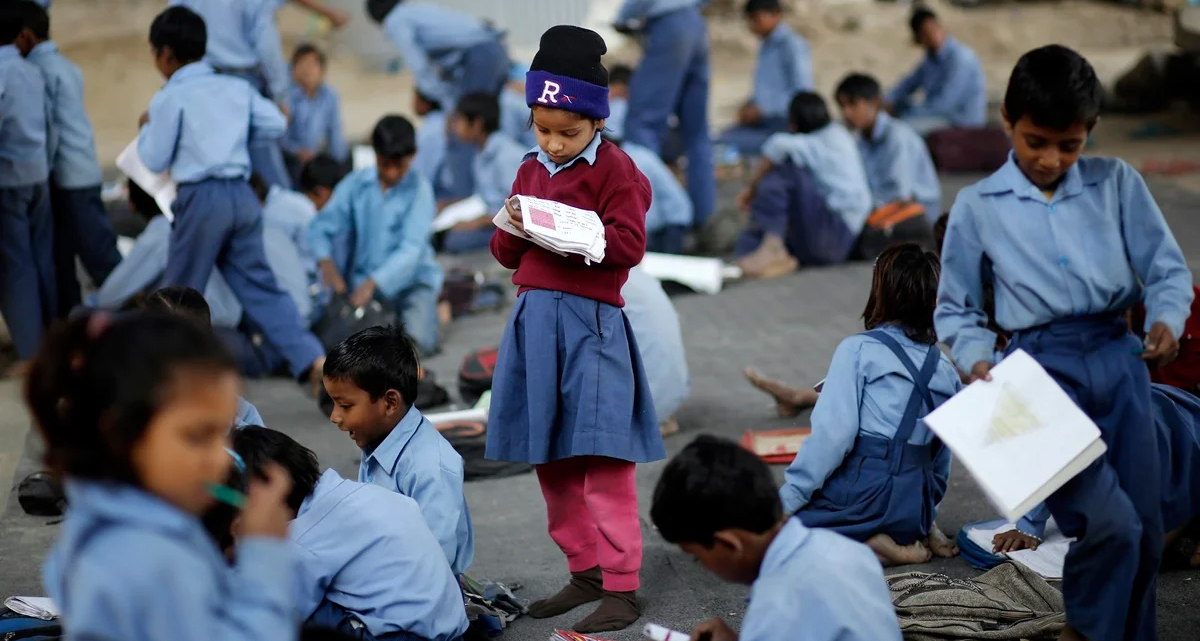
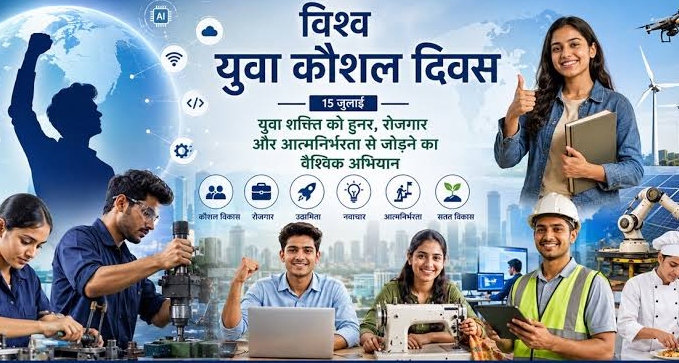
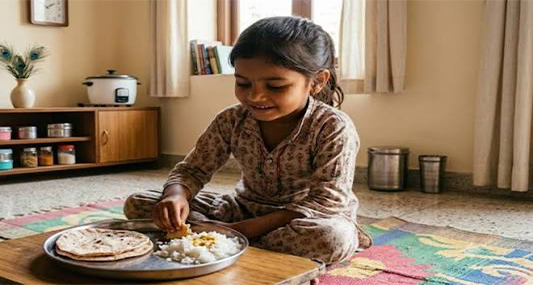
Education & Skill Building: ₹1,08,154 crore (a 28% increase over revised estimates). According to UDISE+ data, state schools support 12.2 million enrolled students, while the PM POSHAN portal records 17.1 million enrolled beneficiaries.
Healthcare Infrastructure: ₹53,326 crore (a 24% increase), with ₹6,818 crore earmarked for rural allopathic services and ₹5,793 crore for urban medical care.
Pensions & Social Protection: ₹8,950 crore for old-age and farmer pensions, and ₹3,500 crore for destitute women.
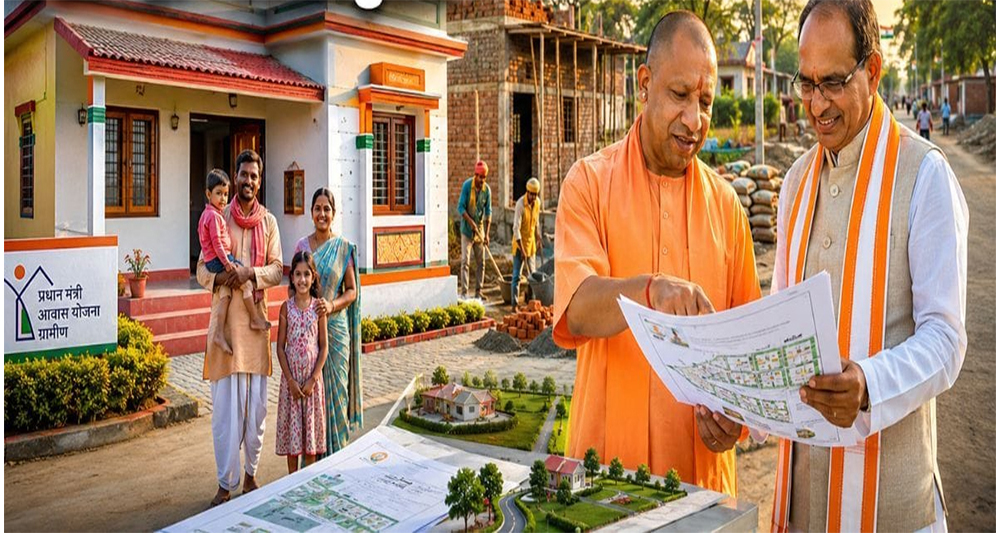
Rural Development: ₹49,044 crore, encompassing PMAY-Gramin (₹6,102 crore), MGNREGA (₹5,544 crore), and the State Livelihood Mission (₹4,580 crore).
3. Revenue Dependency and Committed Liabilities
Despite robust budget expansion, structural financial vulnerabilities persist regarding revenue generation and non-discretionary spending.
| Revenue & Expense Head | Estimated Amount | Share / Fiscal Significance |
|---|---|---|
| Own Tax & Non-Tax Revenue | ₹3,61,245 crore | ~49.5% of total revenue receipts |
| Central Transfers & Grants | ₹3,67,683 crore | ~50.5% of total revenue receipts |
| Committed Expenditure (Salaries, Pensions, Interest) | ₹3,53,743 crore | Consumes nearly 98% of state's own revenue |
With pension liabilities alone projected to grow by 43% in 2026–27, the state remains heavily reliant on central tax shares and grant allocations, highlighting the urgency of expanding the domestic tax base.
4. Ground-Level Delivery Networks and Food Security
The social safety net relies heavily on extensive distribution systems to deliver basic necessities to lower-income households across rural and urban districts.
Food Security Operations: According to AePDS portal data, over 33.3 million active ration cards recorded transactions across a network of 78,000+ fair price shops.
Poverty Reduction Trajectory: NITI Aayog's SDG India Index reflects a drop in national multidimensional poverty from 24.8% (2015–16) to an estimated 11.28%, a trend mirrored by expanding public service delivery in Uttar Pradesh.
Conclusion: Transitioning from Assistance to Self-Reliance
While keeping the fiscal deficit capped at 3% demonstrates disciplined financial management, long-term economic resilience requires transitioning from welfare subsidies to productivity-enhancing investments. As economic analysts point out, welfare schemes must increasingly build human capital—translating direct support into quality education, accessible rural healthcare, and skill development to ensure sustainable self-reliance across Uttar Pradesh.