Transforming Forest Gatherers into Eco-Entrepreneurs: India’s PMJVM Redefines Tribal Livelihoods
From raw forest harvesting to value-added enterprise, the Pradhan Mantri Janjatiya Vikas Mission is restructuring India’s tribal bio-economy through collective ownership and market integration.
For generations, India’s forest-dependent tribal communities have harvested non-timber forest produce under onerous economic conditions. Often trapped in cycles of distress selling and exploited by intermediary traders, gatherers derived only a fraction of the market value of their labor. The Ministry of Tribal Affairs is reshaping this paradigm through the Pradhan Mantri Janjatiya Vikas Mission (PMJVM), an overarching Central Sector Scheme designed to turn primary gatherers into value-adding micro-entrepreneurs.
1. Executive Summary & Mission Architecture
PMJVM consolidates two legacy flagship initiatives to establish a seamless value chain:
Mechanism for Marketing of Minor Forest Produce (MFP) through Minimum Support Price (MSP) and Development of Value Chain for MFP
Institutional Support for Development and Marketing of Tribal Products/Produce
Operational Framework
Nodal Agency: Tribal Cooperative Marketing Development Federation of India (TRIFED) leads implementation, working alongside state tribal development corporations and forest agencies.
Core Strategy: Build robust backward linkages (sustainable harvesting, aggregation, primary processing) and forward linkages (branding, packaging, e-commerce, and institutional retail).
Target Focus: Priority allocation for Particularly Vulnerable Tribal Groups (PVTGs), Aspirational Districts, and forest dwellers holding land rights under the Forest Rights Act (FRA), 2006.
2. Structural & Financial Components
PMJVM operates through a tiered organizational framework backed by direct capital support.
| Entity Level | Primary Function | Maximum Financial Support | Key Operational Parameters |
|---|---|---|---|
| Van Dhan Vikas Kendra (VDVK) | Community aggregation, sorting, grading, and primary processing. | Up to ₹15 Lakh per unit | Comprises ~300 members (grouped in SHGs); requires at least 60% Scheduled Tribe (ST) representation. |
| Van Dhan Producer Enterprise (VDPE) | Secondary processing, industrial packaging, brand scaling, and regional logistics. | Up to ₹64 Lakh over 3 years | Focuses on enterprise expansion, technology integration, and direct market linkage. |
3. Legal Rights and MFP Governance
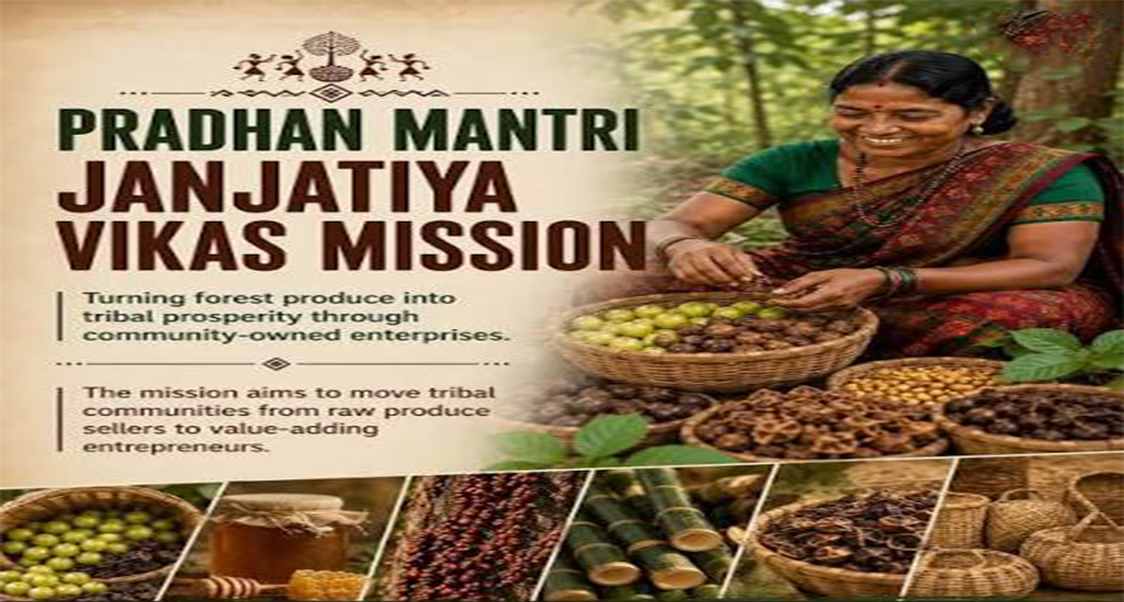
Minor Forest Produce (MFP) encompasses non-timber forest items such as bamboo, cane, wild honey, lac, tendu leaves, mahua flowers, tamarind, and medicinal herbs. India's 104-million tribal population derives 20% to 40% of its annual household cash income from these resources.
Statutory Foundations
PESA Act, 1996: Grants ownership rights over minor forest produce to Gram Sabhas in Scheduled Areas.
Forest Rights Act (FRA), 2006: Recognizes traditional rights of forest-dependent communities to collect, use, and dispose of non-timber forest produce.
MSP Protection & Procurement Metrics
To buffer gatherers against volatile market swings, the central government notifies MSP for 87 key MFP commodities. State procurement agencies, facilitated by TRIFED, step in when open market prices drop below statutory floors.
Cumulative MFP Procurement (Since 2013–14): ~2.68 lakh Metric Tonnes
Total Monetary Value: ₹693.98 Crore
4. Operational Milestones & Impact Analysis
The operational model—anchored by the Van Dhan Yojana launched in April 2018—has scaled into a nationwide network of community enterprises.
| Metric / Indicator | Value / Operational Footprint |
|---|---|
| Approved VDVKs | 4,172 |
| Operational Units | 2,911 |
| Mobilized Tribal Members | 12.48 Lakh |
| Cumulative Sales Recorded | ~₹168 Crore |
End-to-End Value Addition
Capability Building: Gatherers receive scientific collection toolkits, training in sustainable harvesting, and quality-control machinery.
Market Access: Local haat bazaars are integrated with national retail networks, trade expos, and e-commerce portals curated by TRIFED.
Working Capital & Credit: Financial links with commercial banks and National Scheduled Tribes Finance and Development Corporation (NSTFDC) provide working capital for enterprise scaling.
5. Case Study: Women-Led Livelihoods in Arunachal Pradesh
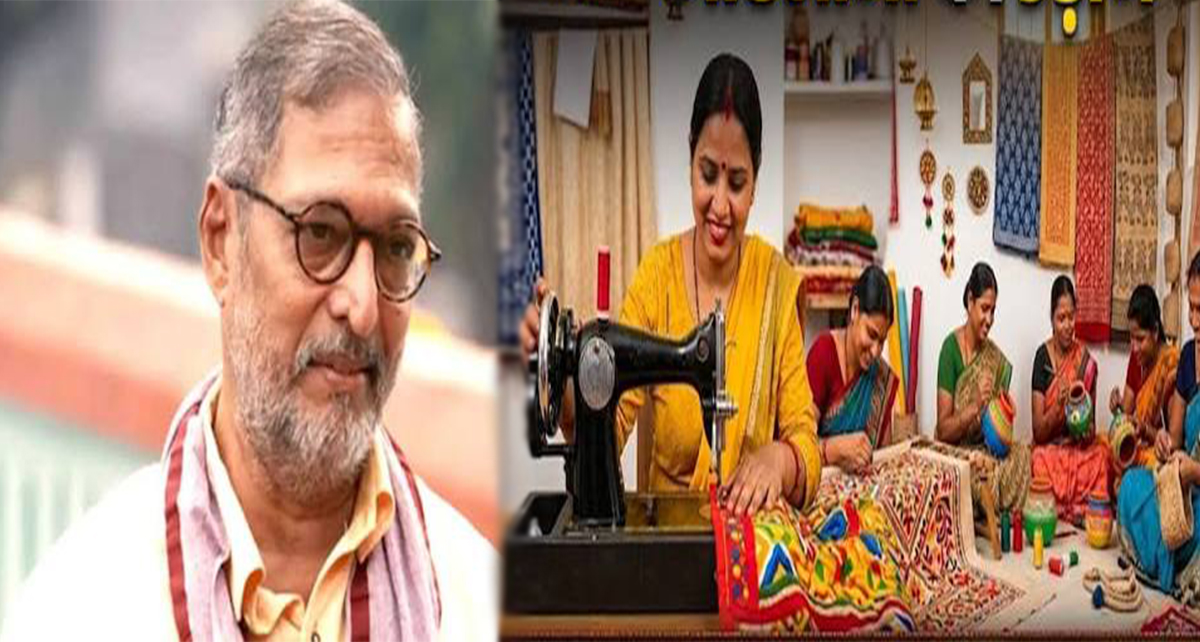
Because women represent the primary workforce in forest gathering, the VDVK model acts as a direct driver of gender-inclusive economic growth.
[ 300 Female SHG Members & Farmers ]
▼
[ Leparada District VDVK (Est. October 2021) ]
▼
(Nyigamane, Ho Yorbe, & Medumhagdum Operations)
▼
Processing Native Produce into Pickles, Powders & Jams
▼
[ Cumulative Revenue: ~₹11 Lakh (2022-23+) ]
▼
Transition from Seasonal Workers to Joint Owners
By transitioning gatherers into joint owners of processing hubs, PMJVM builds stable year-round cash flows, decreasing vulnerability to seasonal agricultural failures.
Structural Synthesis
The Pradhan Mantri Janjatiya Vikas Mission bridges the gap between traditional forest economies and contemporary consumer markets. By embedding statutory ownership rights (PESA/FRA) within a commercial enterprise framework (VDVK/VDPE), PMJVM converts raw biodiversity into sustainable livelihoods—advancing women's financial inclusion and advancing national goals toward Viksit Bharat@2047.